
ERP Software for Manufacturing Industry
Feb/14/2026 18:43:26
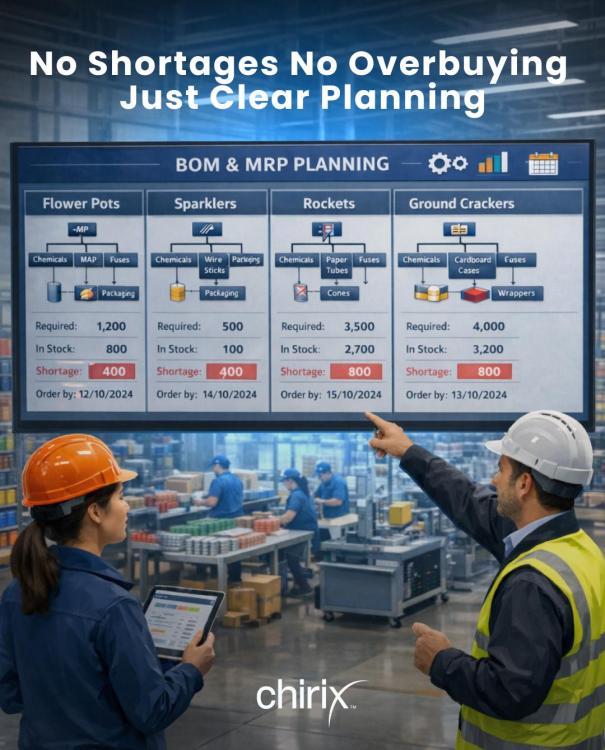
In today’s competitive manufacturing environment, efficiency is no longer optional—it is essential. Manufacturers face constant pressure to deliver faster, reduce costs, and maintain consistent quality, all while managing complex supply chains and fluctuating demand. At the heart of these challenges lies one critical requirement: control. This is why efficient manufacturers increasingly rely on ERP Software for the Manufacturing Industry to balance inventory levels, streamline Bill of Materials (BOM) planning, and maintain smooth production operations.
Traditional manufacturing systems often struggle with disconnected data, manual planning, and delayed visibility. These gaps lead to stock shortages, excess inventory, production delays, and wasted resources. ERP software addresses these issues by integrating inventory, planning, purchasing, and shop-floor operations into one centralized platform.
Balancing Inventory Without Guesswork
Inventory imbalance is one of the most common and costly problems manufacturers face. Excess stock ties up working capital and increases storage costs, while shortages disrupt production schedules and delay deliveries. Managing this balance manually becomes nearly impossible as order volumes and product complexity increase.
ERP software provides real-time inventory visibility across raw materials, work-in-progress, and finished goods. Stock levels are automatically updated as materials are issued, consumed, or received, ensuring data accuracy at all times. With this visibility, manufacturers can maintain optimal inventory levels, reduce waste, and ensure materials are always available when needed.
By replacing guesswork with data-driven planning, ERP systems help manufacturers make smarter procurement decisions and avoid costly inventory mistakes.
Streamlining BOM Planning Across Production
BOM planning plays a critical role in manufacturing accuracy and cost control. Even small errors in BOM data can lead to incorrect material consumption, rework, and production delays. Manual BOM handling often results in inconsistencies, outdated versions, and calculation errors.
ERP software centralizes BOM management, ensuring that every department works with the same, updated data. Material requirements are automatically calculated based on production plans, order quantities, and predefined BOM structures. Unit-of-measure conversions and material calculations are handled by the system, reducing the risk of human error.
This streamlined approach improves production accuracy, minimizes wastage, and ensures consistency across all manufacturing stages.
Improving Coordination Between Departments
One of the biggest advantages of ERP software is improved coordination across departments. In many manufacturing setups, purchasing, planning, production, and inventory teams operate in silos. This lack of alignment leads to miscommunication, delays, and inefficiencies.
ERP systems act as a single source of truth. Purchasing teams gain visibility into production requirements, planners can see real-time inventory availability, and shop-floor teams receive accurate work orders. This shared visibility ensures better collaboration and smoother execution across departments.
With everyone working from the same data, manufacturers experience fewer disruptions and better operational harmony.
Automated Workflows for Greater Control
Manual processes slow down operations and increase the risk of errors. ERP software automates critical workflows such as material planning, production scheduling, inventory updates, and purchase requisitions. Automation ensures that tasks move seamlessly from one stage to the next without unnecessary delays.
By standardizing workflows, manufacturers gain greater control over operations. Automated approvals, alerts, and system-driven updates reduce dependency on manual intervention and improve process discipline.
This level of control is essential for maintaining consistency and meeting production targets in fast-paced manufacturing environments.
Real-Time Visibility Enables Faster Response
In modern manufacturing, delays can escalate quickly if issues are not identified early. ERP software provides real-time visibility into production status, material availability, and order progress. Dashboards and live reports allow managers to monitor performance and identify bottlenecks instantly.
When demand changes or unexpected issues arise, teams can respond quickly by adjusting production schedules or reallocating resources. This agility helps manufacturers maintain uninterrupted production flow and meet customer commitments more reliably.
Real-time visibility transforms operations from reactive to proactive, giving manufacturers a competitive edge.
Supporting Uninterrupted Production Flow
Production interruptions often stem from poor planning and lack of coordination. ERP software ensures that materials, machines, and manpower are aligned with production plans. Accurate scheduling and material availability reduce downtime and improve throughput.
With ERP-driven planning, manufacturers can anticipate potential disruptions and address them before they impact production. This results in smoother operations, higher efficiency, and better utilization of resources.
Uninterrupted production flow is not just about speed—it’s about consistency and reliability.
Enhancing Efficiency and Cost Control
Efficiency in manufacturing is closely tied to cost control. ERP software improves efficiency by reducing manual work, eliminating data duplication, and minimizing errors. Accurate tracking of material consumption and production output enables better cost analysis and control.
Manufacturers can identify inefficiencies, optimize processes, and reduce operational waste. Over time, these improvements lead to healthier margins and improved profitability.
ERP systems also support detailed reporting and analytics, enabling continuous improvement and informed decision-making.
Scalable Systems for Growing Manufacturers
As manufacturing businesses grow, complexity increases. Managing higher order volumes, multiple product lines, and expanded operations becomes challenging without a scalable system.
ERP software is designed to support growth without compromising control. Centralized data, standardized processes, and automation allow manufacturers to scale operations efficiently. Whether expanding capacity or entering new markets, ERP systems provide the foundation for sustainable growth.
Conclusion
Efficient manufacturers rely on ERP Software for the Manufacturing Industry to balance inventory levels, streamline BOM planning, and maintain smooth coordination across production processes. By centralizing data and automating workflows, ERP systems eliminate guesswork, reduce shortages, and prevent excess stock.
With real-time visibility and better control over materials and schedules, manufacturers can respond quickly to demand changes, maintain uninterrupted production flow, and improve overall efficiency. In an increasingly competitive landscape, ERP software is not just a tool—it is a strategic asset that supports scalable growth, operational excellence, and long-term success.
Posted by Anonymous


 [PV:77]